


by Marius Zeilinga · October 16, 2024
When you think of dangerous African wildlife, the lion or elephant might come to mind. But lurking in the shadows, often overlooked, is a creature with a reputation for ferocity rivalling even the jungle king – the Cape buffalo.

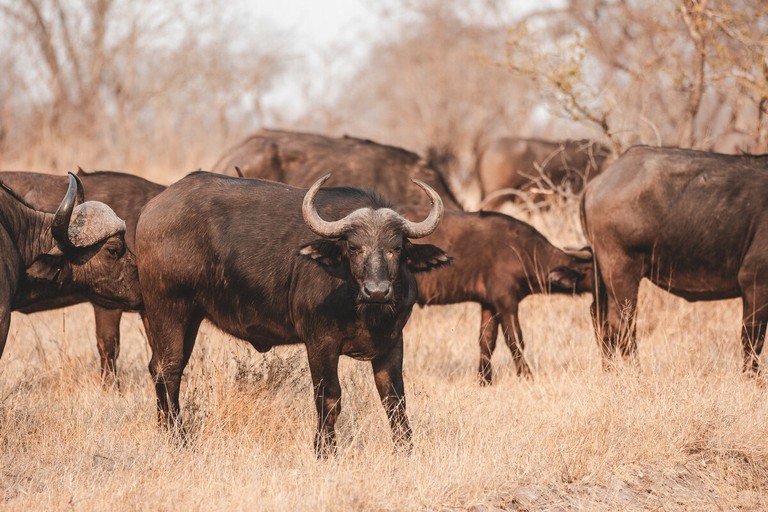
The African buffalo is one of the Big 5 and a force to be reckoned with
Black Death
These massive bovines, found throughout sub-Saharan Africa, are not just imposing in size – they're known for their unpredictable nature and powerful horns, earning them the nickname "Black Death." But beneath the fearsome exterior lies a fascinating animal with complex social structures.
Standing tall at the shoulder and weighing up to 2,000 pounds, Cape buffalo are the largest African buffalo species. Their massive frame is supported by sturdy, muscular legs that allow them to move with surprising speed and agility.
But it's their horns that truly make them formidable. Hard, curved and pointy enough to inflict devastating injuries, their horns are not just for defence – they're also used in fierce battles between males for dominance and mating rights.
You don't ever want to get this up close to the Cape buffalo
A Closer Look at the Cape Buffalo
The Cape buffalo plays a critical role in the African ecosystem. Not only are they vital grazers, helping to control the growth of grasslands and ensuring the health of various plant species, but they also act as a food source for predators like lions, hyenas, and even crocodiles, which makes them an important part in the delicate balance of the food chain.
Despite their reputation for aggression, Cape buffalo are highly social animals, living in herds of up to 1,000 individuals. These herds are led by older and well-experienced members referred to as "pathfinders". While their primary defence mechanism is their sheer size and strength, they're known to exhibit collective defence behaviour, forming a defensive wall or circle facing the threat head-on.
Cape buffalo are highly social animals
This seemingly protective nature can easily turn into a dangerous attack, particularly when threatened or provoked. They have a tendency to charge without warning, and even a seemingly "calm" buffalo can quickly become aggressive, especially if it feels cornered or if its calf is threatened.
Buffalo will go at great, dangerous lengths to protect their young
Celebrating the Buffalo
The Cape buffalo is a creature of respect and caution. Its power, unpredictability, and crucial role in the African ecosystem make it a fascinating and essential element of the continent's biodiversity.
Whether you're admiring them from a safe distance or learning about their complex social structures, there's no denying their awe-inspiring presence. It's a reminder that even the most seemingly docile creatures can possess a fierce side and that respecting the natural world is paramount to its survival.
Experience Africa's Nuances at Silvan Safari
We can't wait to welcome you to Silvan Safari and to show you our great slice of Sabi Sand. We know it like a leopard knows its spots, and can't wait to share its wonders with you. Book your stay with us today.