


by Brad Mitchell · May 4, 2026
Tucked away on the western edge of South Africa's iconic Kruger National Park lies the Sabi Sand Game Reserve, a 65,000-hectare haven for wildlife enthusiasts and conservationists alike. Known for its luxurious lodges, intimate safaris, and legendary leopard sightings, Sabi Sand is also home to one of Africa's most intelligent, emotional, and iconic animals – the African elephant. These giants don't just roam the reserve – they shape it, live within its rhythms, and embody its spirit. To encounter an elephant here is to witness the past, present, and future of the African wilderness all in one majestic creature.

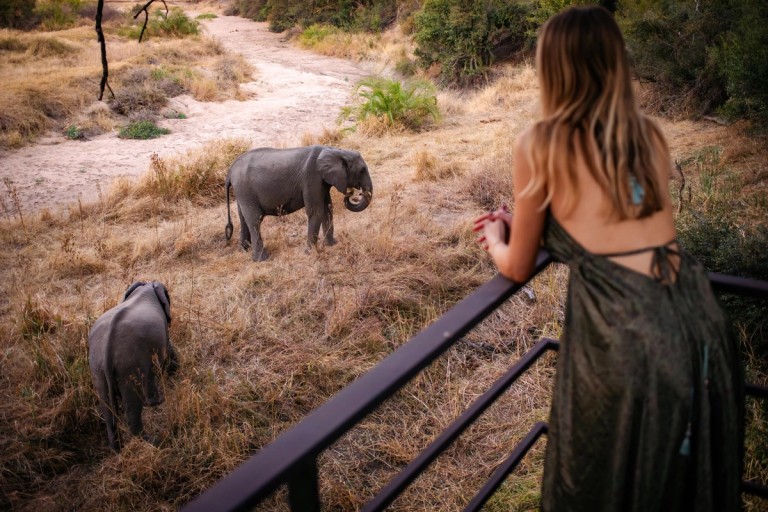
Making eye contact with an elephant is a deeply moving experience
A Living Legacy
Elephants have walked these lands for centuries, long before fences or lodges existed. As a transfrontier ecosystem, Sabi Sand shares an unfenced border with the Greater Kruger National Park, allowing wildlife to move freely across vast territories. For elephants, who can cover up to 50 km in a single day, this movement is essential.
The herds seen in Sabi Sand today are part of one of Africa's largest elephant populations. Today, over 20,000 elephants roam the Greater Kruger ecosystem, and many make their way through Sabi Sand's riverine forests, woodlands, and open savannahs.
The Daily Life of an Elephant in Sabi Sand
Every day, elephants in the reserve follow ancient migration routes, dictated by water, food, and the social fabric of the herd. They rise early with the sun, cooling off at waterholes or wallowing in mud, which helps protect their skin from the scorching heat and biting insects.
The Sabi and Sand Rivers, after which the reserve is named, are lifelines in this semi-arid region. Elephants often gather at these waterways to drink, bathe, and socialise. During the dry season, when water is scarce, elephants have also been known to dig into dry riverbeds to access subterranean water – an act that not only sustains them but also creates small pools that benefit other animals.
Watching a herd of elephants interact is like observing a living opera. There are matriarchs – the wise, older females who lead the group with years of memory and experience. Young bulls test their strength in mock battles, while calves explore the world under the close watch of protective mothers and "allomothers" (other females in the herd who help raise the young).
Clumsy and curious, baby elephants provide endless entertainment on safari
Intelligence and Emotion: The Elephant Mind
Elephants in Sabi Sand display remarkable intelligence. They're problem-solvers, capable of complex thought and even tool use – such as using branches to swat flies or plug waterholes. Their memories are so refined that matriarchs can remember the locations of distant water sources and navigate their herds across landscapes with precision.
But beyond intelligence lies a rich emotional world. Elephants have been observed mourning their dead, lingering over the bones of fallen kin, or even returning to the site of a herd member's death years later. In Sabi Sand, guides and trackers recount moments of quiet awe – such as when a herd stops in silence, trunks raised, ears fanned, in what seems like a collective act of memory or mourning.
Elephants as Ecosystem Engineers
Here, elephants are not just residents – they're also landscape architects. Their foraging behaviour can drastically alter vegetation. They knock down trees to reach high branches or strip bark to access nutrients, which can seem destructive at first glance. But this activity creates open spaces for grasses to grow, encouraging grazing species like zebra and wildebeest.
Fallen trees become shelter for reptiles, birds, and small mammals. Treefalls can open up new paths through the bush, shaping how other animals move through the landscape. In this way, elephants help maintain the biodiversity and dynamism of the Sabi Sand ecosystem.
Observing elephants' behaviour is heart-stirring and strangely familiar
The Human-Elephant Connection
The Sabi Sand is not just about wildlife, but also about the relationship between humans and nature. The reserve's lodges and guides often speak of elephants with reverence and affection. Guests on safari may find themselves in quiet standoffs with bulls on bush roads or witnessing a mother gently coaxing her calf across the river. These are moments that stay with you long after the game drive ends.
However, the human-elephant relationship is not without tension. Across Africa, elephants are under threat from habitat loss, poaching, and human-wildlife conflict. In South Africa, where populations have recovered, new challenges arise, such as managing elephant numbers in fenced reserves and preventing habitat degradation from overpopulation.
With its open boundaries and community-focused conservation model, the reserve offers a hopeful example of coexistence. Many lodges support local communities through employment, education, and eco-tourism initiatives, helping to ensure that elephants and people benefit from the reserve's success.
Elephant Encounters: What to Expect on Safari
One of the most magical aspects of visiting this private reserve is how close you can get to wildlife – respectfully and safely. Elephants often approach safari vehicles out of curiosity, not fear, giving guests a chance to observe these animals up close. You might witness a bull flaring his ears in mock charge, or hear the deep, infrasonic rumble of communication between distant herds – sounds humans can't hear but often feel in their bones.
Photographers will be spoiled by golden light filtering through dust as elephants move across the river, or by dramatic silhouettes at sunset. These encounters are often more than just sightings; they're emotional experiences, reminders of our connection to the natural world.
Our guides will tell you many fascinating tales of elephants
Conservation and the Future
While Sabi Sand's elephants are relatively secure, the broader picture across Africa is more complex. Conservationists continue to fight against ivory poaching, habitat fragmentation, and climate change – all of which threaten elephant populations elsewhere on the continent.
In this context, the reserve plays a crucial role. It serves as a model of sustainable ecotourism, a stronghold for elephant conservation, and a place where people from around the world can fall in love with Africa's wildlife and return home as advocates.
The future of elephants here and across Africa depends on continued collaboration among governments, conservation groups, scientists, local communities, and safari guests. Every visit, every photograph shared, and every story told helps build a movement of awareness and protection.
It's impossible not to fall in love with elephants
Where Giants Still Roam
In a world of growing cities and shrinking wilderness, the Sabi Sand is a rare refuge – a place where elephants still roam free, led by memories older than most maps, and bound by bonds deeper than most humans can imagine.
To walk, or even drive, where they roam is to be reminded that nature, in its rawest and most majestic form, is still alive. In the presence of these gentle giants, we're smaller, quieter, more reverent. And that's exactly how it should be.
If you'd like to experience these giants in one of Africa's great wildlife sanctuaries, we'd love to welcome you to Silvan Safari. Join us in the Sabi Sand and watch the story of elephants unfold.